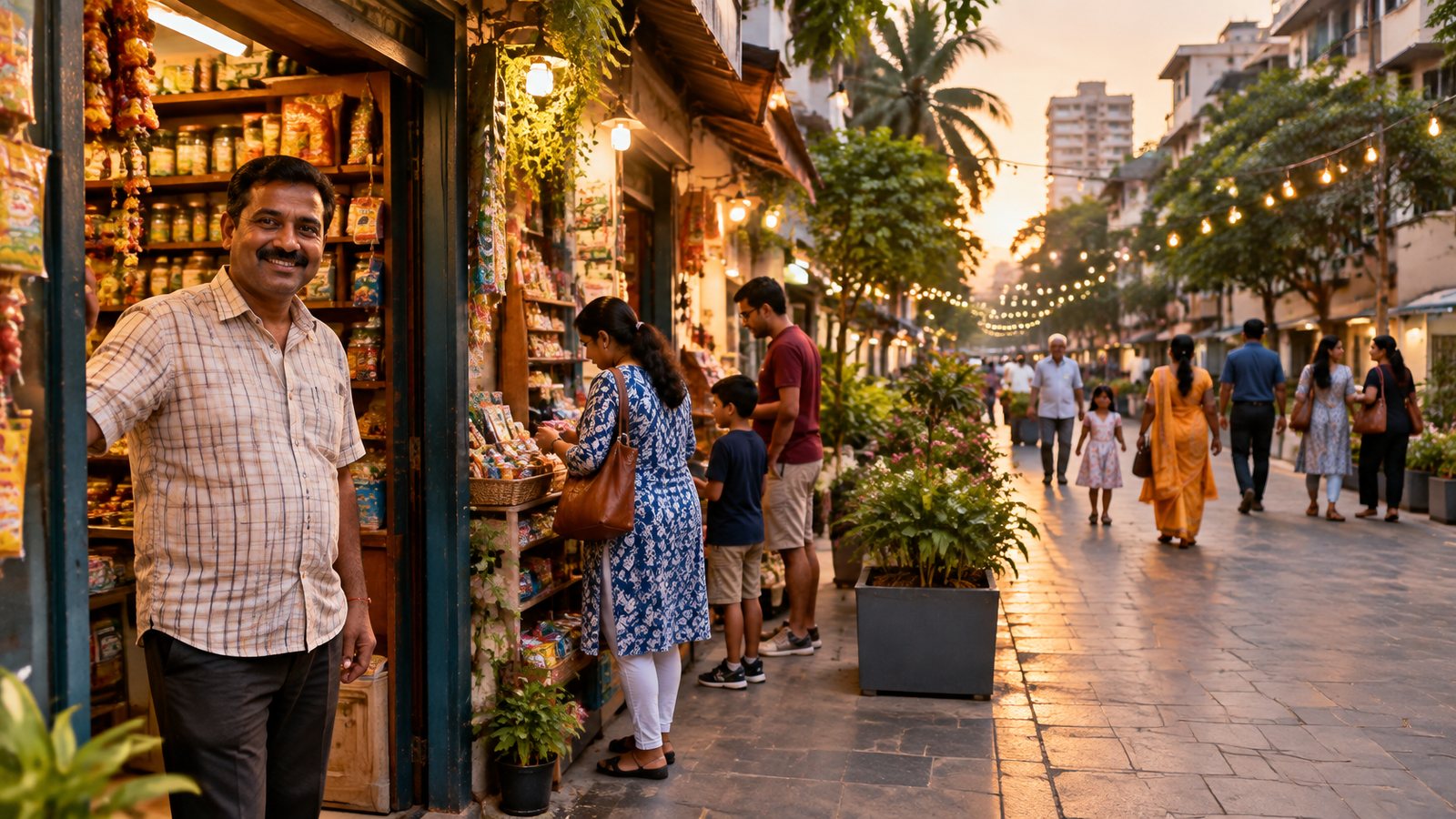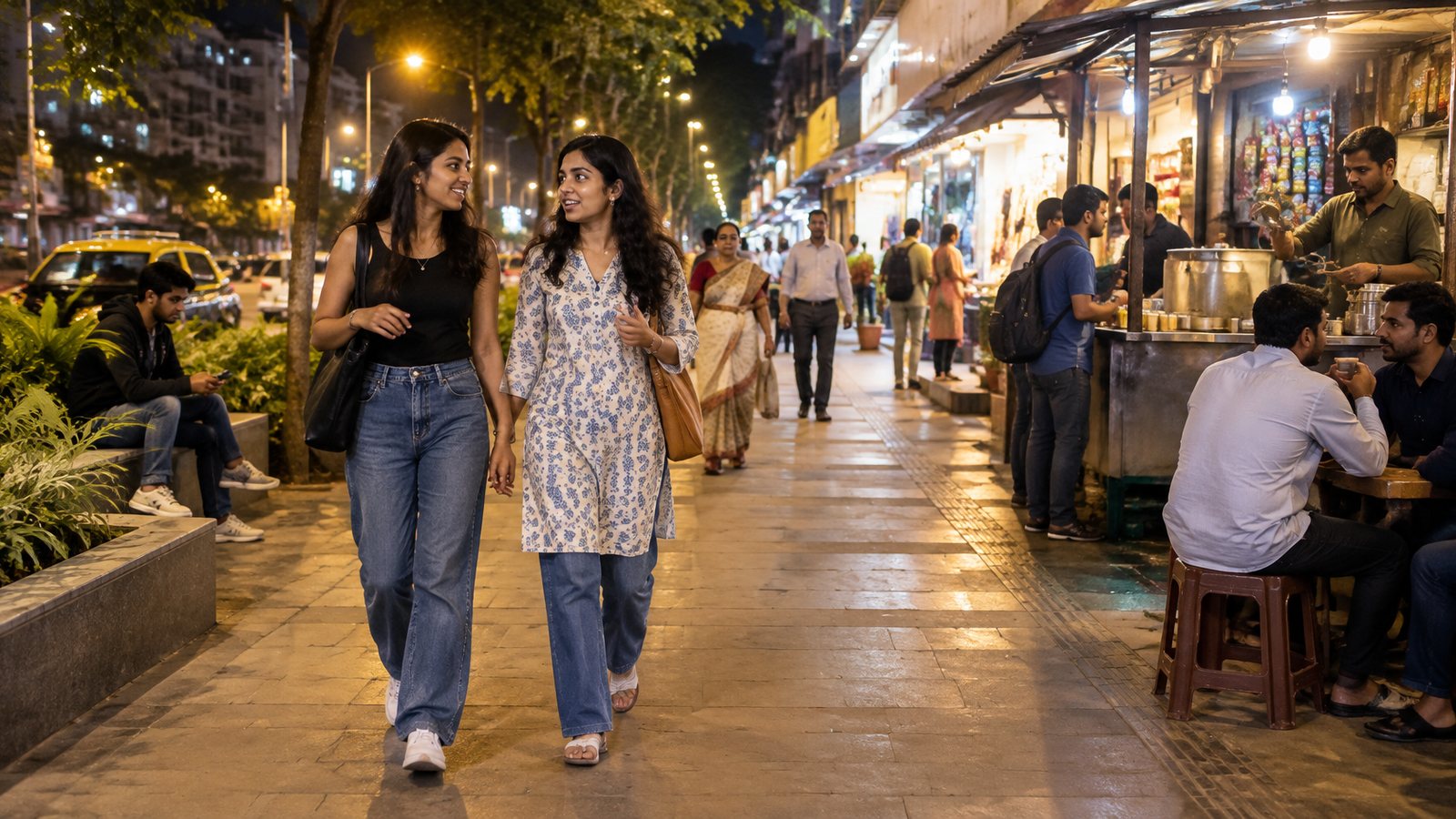
If you have ever shopped in T. Nagar in Chennai, you know the old Pondy Bazaar: some of the busiest shops in South India, and footpaths only two or three feet wide. Shoppers walked on the road, between cars and autos, holding their bags and their children.
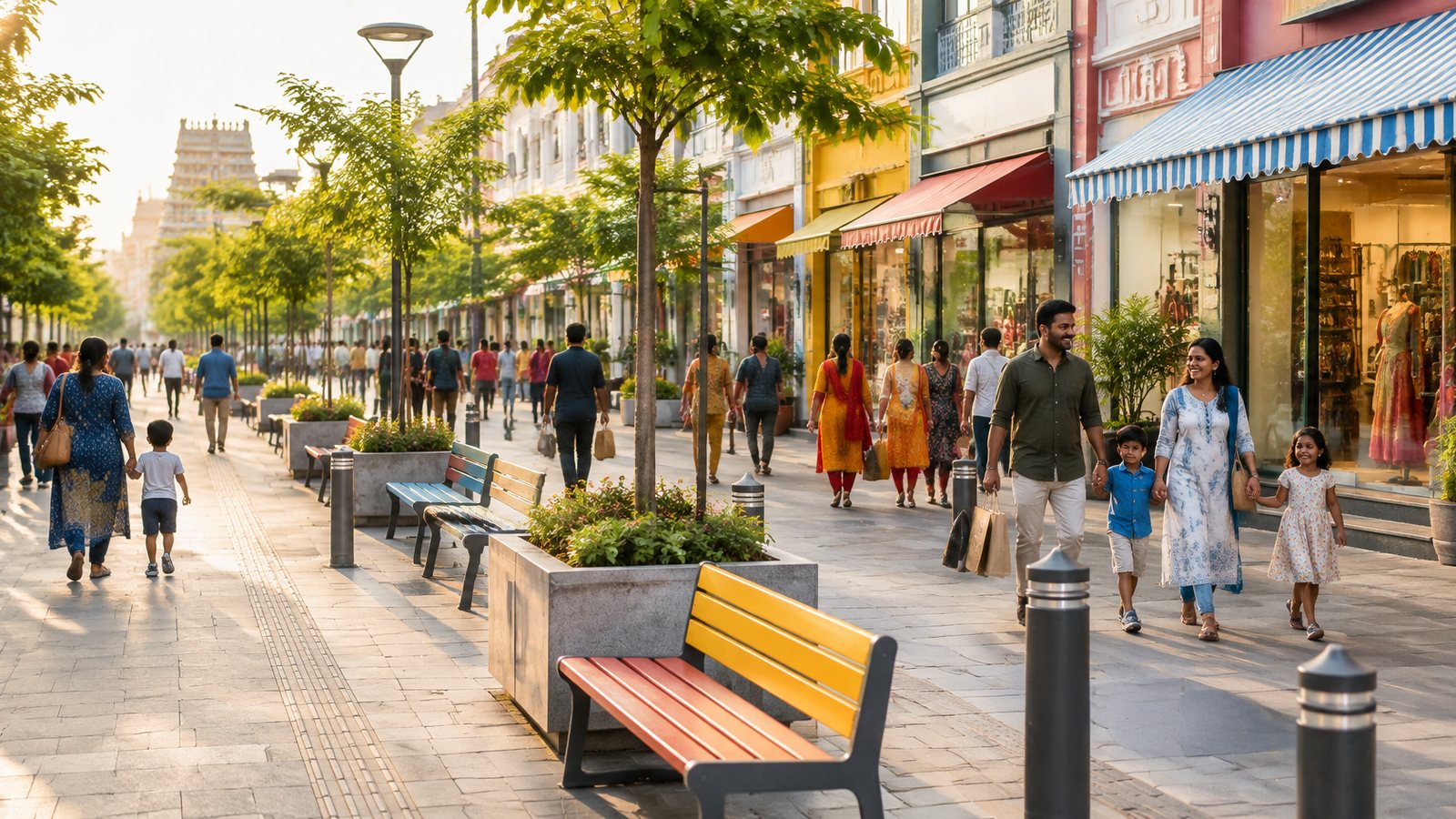
In 2018, the city decided to try something that many people said would never work in India. It rebuilt Sir Theyagaraya Road, the street through Pondy Bazaar, around people instead of vehicles. The pedestrian plaza opened on 13 November 2019.
What changed on the street
- Wide footpaths. From a narrow 2–3 feet to up to 10 feet in the main shopping stretch.
- Bollards to stop vehicles from climbing onto the walkway.
- Colourful seating and child-friendly play equipment.
- About 60 new trees and planter boxes.
- LED lights in place of old sodium lamps, and wall murals.
- Organised parking, restrooms, and battery vehicles for elderly and disabled shoppers.
What happened next
The fear was that shops would lose customers if cars could not stop at their door. The opposite happened. Shop owners told the C40 cities network that their sales rose by 15–20% compared with the same months in earlier years. Children played longer, and women and older shoppers found the street easier to use.
A later study by the Institute for Transportation and Development Policy (ITDP), called The Healthy Street Dividend, compared pedestrian-friendly streets with ordinary roads. It found shopkeeper turnover about 20% higher, pedestrian numbers about 36% higher, and nearly 89% of women surveyed saying they felt safer on the redesigned streets. Organised parking on Pondy Bazaar even earns money that helps pay for upkeep.
Design the street for the people who walk it, and the people who sell on it do better too.— The Pondy Bazaar lesson
Three lessons for your street
1. The footpath is the shop's front door
Most customers arrive on foot, even if they parked a little way off. A wide, level, continuous footpath is the best investment a shopping street can make.
2. People stay where they can sit
Benches, shade and a corner for children turn a street you hurry through into a street you spend time on — and time on a street becomes money in its shops.
3. Upkeep must be planned from day one
Even good streets slip when nobody looks after them. Reports on Pondy Bazaar since then show how quickly parking and encroachment creep back without care. That is why every MIB design comes with a care plan, and why residents and shopkeepers are part of it from the start.
Your street doesn't need a ₹40 crore project
Pondy Bazaar was a big city project. Most residential streets and lanes need far less: a fixed waste point, a clear footpath, trees, light, a few benches, art on the walls, and an agreement about where vehicles park. The ideas are the same; only the scale changes.
That is exactly what the MIB Street Pledge is for: neighbours come together, an MIB designer plans the street, and everybody sees the exact budget before anyone pays.
Sources
- Chennai's Pondy Bazaar pedestrian plaza — C40 Cities case study
- Walkable streets boost business, improve safety on Pondy Bazaar: study (ITDP "The Healthy Street Dividend") — DT Next
- All is not well at the T Nagar pedestrian plaza — Citizen Matters
Pictures on this page are illustrations and MIB design visions, not photographs of the places named.