Every street has that wall. The compound wall of a closed plant, the side of a building, the pillar under a flyover. It is covered in posters on top of posters, paan stains at the bottom, and sometimes it is used as a toilet.
Painting it plain white rarely helps — a clean white wall is an invitation for the next poster. But a wall with a beautiful mural sends a very different message.
India already has the proof
Lodhi Art District, Delhi. Starting in 2015–16, the St+art India Foundation worked with government bodies and sponsors to paint large murals across the walls of Lodhi Colony, a residential area. Artists from India and abroad turned it into what is often called India's first open-air public art district. Families now visit it on weekends; the walls became a destination.
The Ugly Indian, Bengaluru. This anonymous volunteer group started Project UFO in 2015, cleaning and painting the pillars under flyovers that used to attract posters and dumping. The idea spread to other cities, including Delhi, Pune and Chennai.
Nobody spits on a painting. People don't paste posters on something they love.— MIB Stories
Why art works where rules don't
- It signals care. A painted wall says "someone looks after this place".
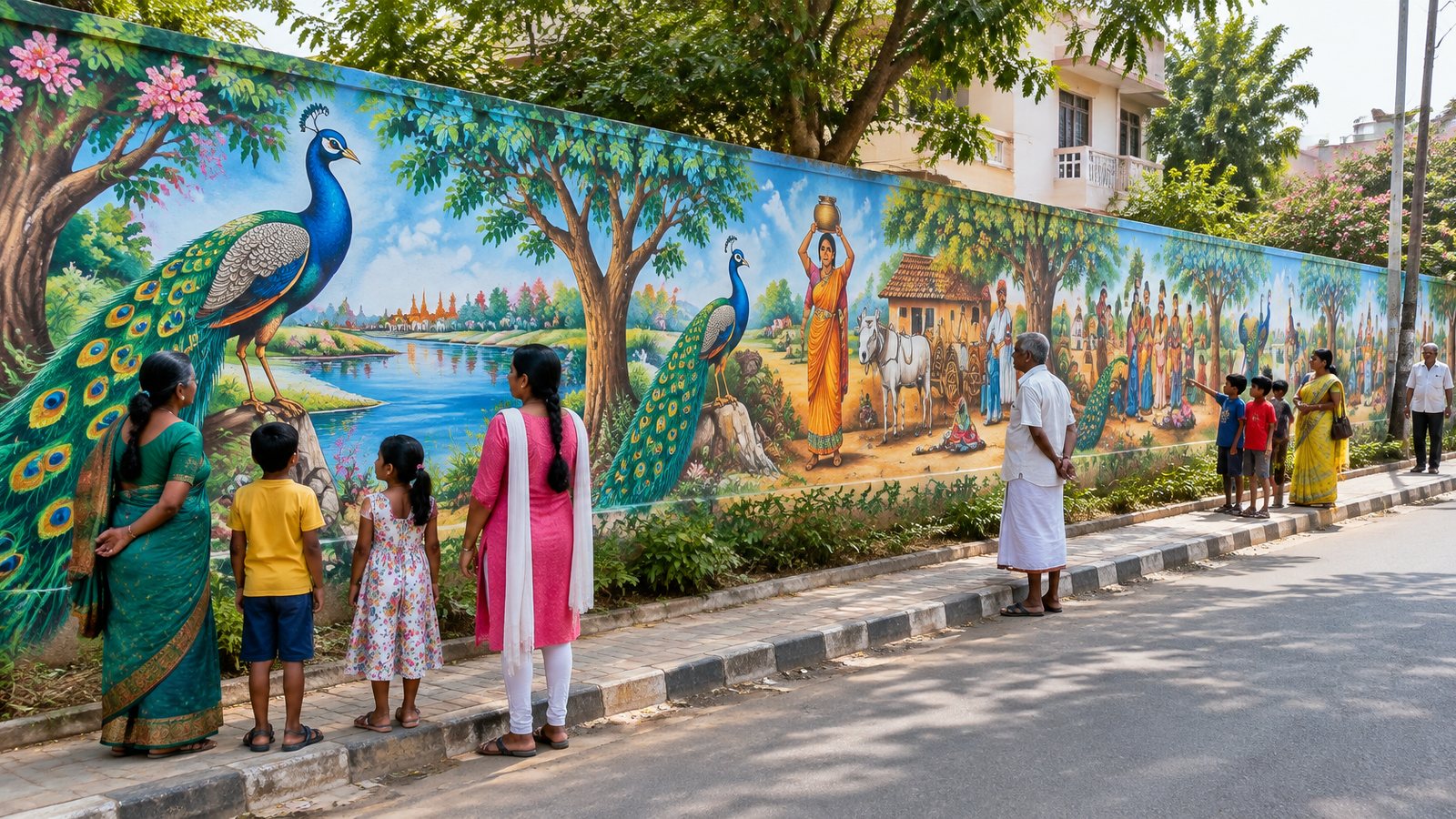
- It gives identity. "The lane with the peacock wall" becomes your street's name.
- It involves people. When local children and residents help paint, they guard it.
- It costs less than a wall that needs cleaning every month.
How to plan a mural on your street
- Choose the right wall. The one that is most abused now — that is where the change will be most visible.
- Get permission. From the wall's owner (a building, a society, a company) and, where needed, the ward office. MIB handles this in a Street Pledge.
- Decide the story together. Your area's history, its festivals, its trees, its people. Avoid ads and political messages.
- Prepare the wall properly. Clean, repair and prime it, or the paint will peel in one monsoon.
- Paint with professionals and the community. An artist leads; residents and children fill in.
- Plan the care. Anti-poster coating, a quick touch-up after each monsoon, and someone to call if it's damaged.
Art is one of the fastest, happiest ways to start changing a street. If your street has "that wall", tell us about it in your Street Pledge — or send us a photo on WhatsApp.
Sources
Pictures on this page are illustrations and MIB design visions, not photographs of the places named.